Fast-twitch, slow twitch, speed work, strength work, conditioning work, mobility, neuro function, agility, balance, cross-training, etc, etc, etc.
The world of strength training can be so confusing and it can be hard to know what type of work can help you and your activities the most. What is the best way to get faster? Stronger? More agile? Recover from injury? The way you train – the load, the speed, the tempo – all of these change the response in your body.
When designing strength programs, I like to think in layers. Take a look below for a guide on how to set up your own programming. Need help? Reach out to Koa Fit and schedule a session.
Layer 1 – Strength vs Conditioning
This is where I see people make the biggest mistake. In Boulder, most people are doing some sort of endurance activity, whether it it cycling, hiking, walking, or running. Then they head to the gym and do high rep, low weight strength training. These are similar stimulus and will illicit similar responses in the body. Meaning, there is no cross-training happening.
Benefits of Strength Training
- Hypertrophy
- Power
- Explosive/Dynamic
- Bone Health
Benefits of Conditioning Training
- Foundational Fitness
- Stamina
- Endurance
- Aerobic Capacity
If you are doing an endurance activity, most of your conditioning will already be covered. Think about using the gym for more strength focus. If you are new to lifting or are using it as your primary way of moving and exercising, you will want to stay in more of the conditioning realm or include both.
Within this layer, you can also include:
- Corrective work/rehab – remember to train for when things may go wrong, not just power for when things go right.
- Prep work
- Isolation Movements
- Compound Movements
You will want to progress each week. Whether it is 1 extra rep or extra load, you want to do more each week so you can see improvement.
There are 2 ways to progress:
2 Ways to progress
- More load – reps, weight, time under tension
- More complexity – position, stability, multi-joint, coordination
Layer 2 – Tempo
There are 3 different stresses put on the muscle with every movement. Depending on which part of the movement you focus on, you can change the input.
- Concentric – Muscle shortens under load
- Eccentric – Muscle lengthens under load
- Isometric – Muscle is static under load
Concentric focused will help you create explosive, dynamic power. Eccentric focus can be better to increase overall strength and is utilized for injury prevention and recovery. Isometrics are helpful if you need a lotto strength in a specific range or if the joint you are working is compromised and you want to strengthen while not aggravating the area.
Layer 3 – Specificity
Once you have the first 2 layers dialed for what works best for you, you can start to get very specific with your program.
Things like:
- Joint Focus
- Pattern Focus
- Sport Specific
Layer 4 – Extras
Once you have your program dialed with the first 3 layers, take a look at what could be missing. Some extra things to think about when training are:
- Balance
- Coordination
- Rhythm
- Mobility
- Agility
- Mind/Body Connection
I hope this helps you improve your strength training program and gives you some ideas about how to make it work better for you. If need guidance or would like me to set up a program for you, please reach out at Brenna@koafitusa.com
 I want to use this very appropriate time in the year to talk about resolutions. I have noticed that the media surrounding this subject has changed over the last few years. As a society, we have consistently failed at keeping our New Year’s Resolutions, so the popular message has turned to “stop making them”. While I agree that resolutions put a lot of pressure on ourselves and I also agree that most people don’t follow thru, I believe this problem to be user error rather than the act of making a resolution.
 The Squat – it is the epitome of a gym exercise, the king move amongst gym rats, the foundational move for all athletes. Anyone can do a squat. It should be a no-brainer, right? Sorry, not so fast.
 So how are those New Year’s Resolutions going? If your answer is “not so great”, you are not alone. 80% of people have given up on their resolutions by February. But don’t worry, this is not failure, just a temporary set-back. It is also not an excuse for YOU to give up. With a little organization, re-motivation, and of course, a PLAN you can continue to work towards your goals. Let’s get you back on track.
 Now that you have your priorities established, it is time dig into why you made your New Year’s Resolutions. Knowing the root of your motivation to change will help carry you through the tougher points of your transition. It will also help you identify if your goals truly represent what you want. Establishing your “why” can help you modify your goals so they reflect what YOU want for YOURSELF rather than what you think the world wants of you.
 Change is hard, but it is much easier when you know why you are changing and have a clear road map. Do some work up front so you don’t find yourself struggling later down the line. As Antoine de Saint-Exupéry stated, “A goal without a plan, is just a wish”.
 If you work out, know people who work out, or ever read anything on the internet about working out, you have probably heard of High Intensity Interval Training or HIIT. I know, it sounds “Intense” for lack of a better word. Sounds like something crazy bootcamp people would do, or a high school football team, or celebrities. But I am here to tell you ANYONE can do HIIT and EVERYONE can benefit from it.
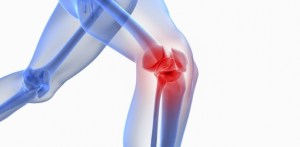 Try this quick and easy at-home exercises to strengthen your hips, knees, and ankles. Help support the knee joint and prevent injury by bringing more mobility and stability to your hips. Start with these 3 foam roller releases to get the legs moving correctly and then move into the 5 strength moves below to help bring stability to the knee joint and the lower kinetic chain.
 Brenna Backe