We are back to that back line! The hamstrings do so much to protect our knees. It is important that they stay mobile and strong.
Injury Prevention
Knee Month – Week Three
This week we will focus on the function of the quad and hip flexors. We will start with a release of our hamstrings and create some space on the posterior part of the thigh so that we are able to fully engage the anterior part of the thigh.
Knee Month – Week Two
This week, we will focus on the lower leg below the knee. By increasing the range of motion in the ankle, we can help take pressure off of the knees.
Shoulder Month – Week 1
This month, we are going to focus on shoulder health. Follow along all month long and get moves that help create strong, mobile shoulders.
Hip Month – Week 2
This week we are focusing on hip rotation with our 90/90 mobilization and our shin box press-up.
Runner and Walker Recovery – Hip Pain
 At my studio, Koa Fit, we work with not only runners and walkers with hip pain, but also cyclists, dancers, golfers, tennis players and a lot more. As said before in my previous posts about foot pain and knee pain, “hip pain” is a broad term. Most importantly, your hip pain could actually be back pain in disguise. It is important to know if your hip pain is a symptom of overuse/misuse or if it is nerve pain. A physical therapist can run you through some tests to help you identify where your pain is coming from.
For the purpose of this post, I am going to be addressing the hip pain in the upper hamstring that is usually associated with activity. It normally comes about during or after strenuous activity and feels like a a deep ache or muscle strain located where your leg meets your bum in the back. Any pain that feels “sharp” or “burn-y” is most likely nerve pain and you will need more evaluation before getting appropriate exercises.
To help relieve and prevent the onset of hip pain, try the exercises below. Even with the absence of hip pain, these exercises are good to perform to keep the hips moving smoothly and to avoid over-tightness.
Runner and Walker Recovery – Knee Pain
 Let’s move on to the 2nd biggest complaint among runners and walkers, knee pain (if you have the 1st, foot pain, please see my last post). I know “knee pain” is such a broad term, but let’s start big picture and then move into the details.
Pain in the knee, if not caused by trauma (getting side-tackled for example), comes from a dysfunction of your biomechanics, or movements. The movement I am talking about most is your gait, whether walking or running. When you have a breakdown in the mechanics of your gait, that deficiency gets highlighted over thousands, perhaps hundreds of thousands of repetitions with each training session.
It is important to have a professional assess your walking and running patterns to identify any inefficiencies you may have in your stride. But for now, we are going to focus on one of the more common points of pain, patellofemoral pain. This is the pain commonly felt just below the kneecap and is usually a signal of over-used quadriceps and an under-utilized posterior kinetic chain (arch, calves, hamstrings, and glutes).
Try the exercises below to help prevent the onset of patellofemoral pain and keep your knees happy!
Runner and Walker Recovery – Foot Pain
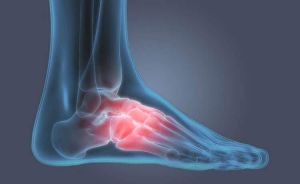 One of the main complaints I hear from my runners and walkers is about pain their feet. Whether it be the heel, arch, or ball of the foot, it seems every pedestrian ends up with foot pain at one point or another.
There are many factors that can cause inflammation on the bottom of the foot. It is best to get an assessment by a movement specialist to determine your precise cause. However, there are a few general movements you can start doing to help you keep the pain at bay or even prevent it from starting in the first place. Check out the video below and follow along to help increase your foot’s flexibility and strength.
Fix Your Forward Head Posture

Did you know it has been estimated that up to 90% of us have forward head posture? Want to know if you do? Stand up right now, turn your camera on, hold your arm straight out to the side and snap a pic of your profile, including your shoulder. Take a look. Are you ears forward of your shoulders? Congratulations! You have forward head posture.
Let’s take a quick look at what causes forward head posture (from now on we will call this FHP to save me some time sitting at the computer). There are the obvious culprits – prolong sitting, computer use, texting, and trauma such as whiplash from a car accident. But there are also things we don’t think about – the sports we play, the heavy backpack we carry, our jobs, the way we breath.
{Side Note} Let’s talk about this last one for a hot second. The stress of our daily lives has left most people with shallow, stressed, labored breathing. We no longer take relaxed breaths. Instead, most of us have a habit (without even noticing it) of holding our breath or breathing faster than we need. This alone can not only affect things like your heart, your oxygen intake, and your mood, but it can also start to tighten down the muscles at the front of the neck, pulling your head forward. For more on how to help your breathing, check out my past blog post, Breathe Deep.
Symptoms of FHP don’t just include looking like a sad puppy, there are also REAL issues that can occur. Because of the strain FHP puts on the cervical spine, every system is affected. This includes the musculoskeletal systems (headaches anyone?), the nervous system (maybe you are a tingling hands kind of person?), and the vascular system (raise your hand if you have sleep apnea!). The longer your head hangs out there, the more vulnerable you are to muscle spams, bulging and herniated discs, and even TMJ.
So, let’s get to work. Perform these 8 moves a couple times a week. Use them as a warm-up to your other activities or do them right before bed.
6 Exercises for Stronger Feet
 We all know our feet are important. They are our foundation and help keep everything above them safe. But weak feet can lead to aches, pains, and injury. So, here are 6 exercises you can do using a rolled up yoga mat (I use a 1/2 roller in the videos). That’s it! That is all you need to help strengthen your feet and simultaneously improve your balance, strengthen your hips, and take stress off your spine.
 Brenna Backe